

-
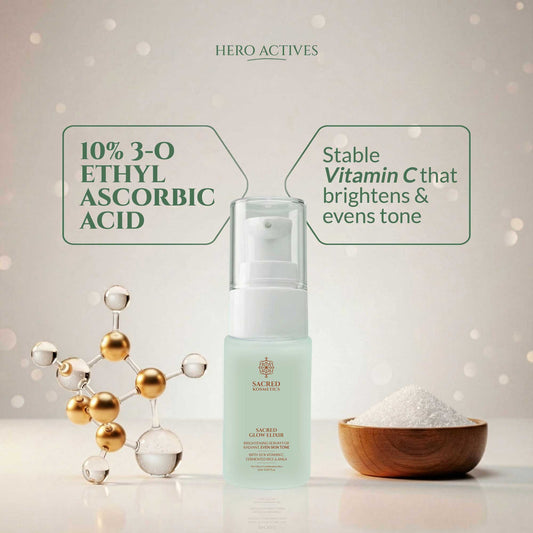
Sacred Glow Elixir 15ml – Vitamin C Brightening Serum
Regular price Rs. 399.00Regular priceRs. 599.00Sale price Rs. 399.00Sale -
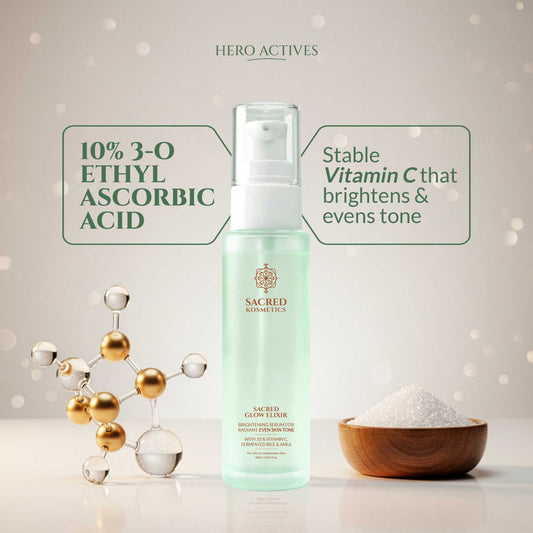
Sacred Glow Elixir 30ml – Vitamin C Serum for Indian Skin
Regular price Rs. 799.00Regular priceRs. 1,099.00Sale price Rs. 799.00Sale -
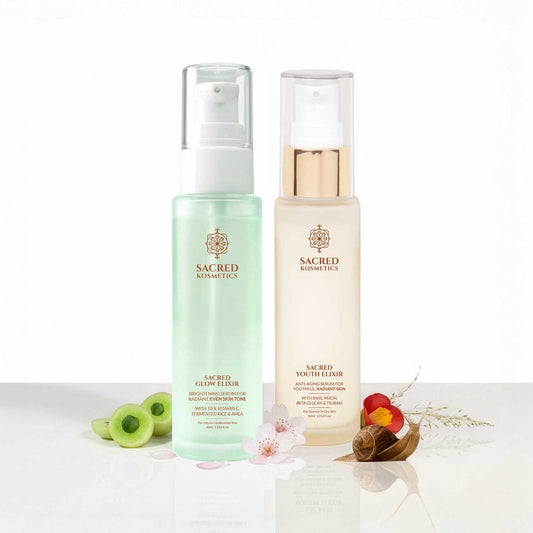
Glow Restore Skincare Ritual Set for Radiant Youthful Skin
Regular price Rs. 1,349.00Regular priceRs. 2,199.00Sale price Rs. 1,349.00Sale -
Glow Restore Skincare Ritual Set 15ml Trial Size
Regular price Rs. 849.00Regular priceRs. 1,298.00Sale price Rs. 849.00Sale





The Real Reason Dark Spots Keep Coming Back
Pigmentation in melanin-rich skin is not just about excess melanin. It is about inflammation, barrier disruption, and environmental triggers that keep stimulating melanin production even when you use brightening actives.
Most people treat pigmentation as a surface problem. They use vitamin C or niacinamide and expect dark spots to fade. When results are slow or inconsistent, they switch products or increase concentration, which often triggers more inflammation and worsens pigmentation.
Pigmentation control requires addressing both the visible marks and the underlying triggers. This means calming inflammation, strengthening the barrier, regulating melanin production, and protecting against UV and pollution that reactivate pigmentation pathways.
Single Actives Hit a Wall With Stubborn Pigmentation
Using only vitamin C addresses melanin regulation but does not calm the inflammation that triggers new pigmentation. Using only niacinamide supports the barrier but may not provide enough antioxidant protection against environmental stress.
Single actives work to a point, then plateau. The skin adapts, or the underlying triggers remain unaddressed. This is why people see initial improvement that stalls after a few weeks.
Rituals that combine complementary actives deliver better results because they address pigmentation from multiple angles. One active regulates melanin. Another calms inflammation. Together, they prevent new pigmentation while fading existing marks.
How Active Serums Work Together for Pigmentation Control
Vitamin C inhibits tyrosinase, the enzyme responsible for melanin production. It also provides antioxidant protection against free radicals that trigger pigmentation. For Indian skin prone to post-inflammatory hyperpigmentation, vitamin C is essential for preventing new marks.
Anti-aging or barrier-supporting serums calm inflammation, strengthen the skin's protective layer, and improve tolerance to environmental stress. This reduces the inflammatory triggers that cause melanin overproduction in the first place.
Used together, these serums address both correction and prevention. One fades existing pigmentation. The other stops new pigmentation from forming. This dual approach delivers sustained improvement rather than temporary fading.
Inflammation Drives Pigmentation More Than Melanin Itself
In melanin-rich skin, inflammation is the primary trigger for pigmentation. A pimple, irritation from harsh products, heat exposure, or even friction can cause melanin production to spike. This is why pigmentation often appears after breakouts, waxing, or using aggressive treatments.
If you do not address inflammation, pigmentation will keep returning no matter how many brightening actives you use. The skin stays in a reactive state, constantly producing melanin in response to triggers.
For individuals managing inflammation alongside pigmentation, active rituals align with dark spot correcting serums that calm the skin while addressing tone concerns.
Who Actually Needs a Pigmentation Control Ritual
This category suits individuals with persistent dark spots, post-acne marks, sun damage, or uneven tone that does not improve with basic brightening products alone. People whose pigmentation returns quickly after fading.
Those with sensitive or reactive skin benefit because the ritual balances active correction with barrier support. This prevents the irritation that often makes pigmentation worse in melanin-rich skin.
Anyone frustrated by slow or inconsistent results from single products finds pigmentation rituals practical. They address the complexity of pigmentation rather than treating it as a simple cosmetic issue.
Using Active Serums Without Triggering More Dark Spots
Use vitamin C serum in the morning after cleansing. Apply a few drops, let it absorb, then follow with sunscreen. Sunscreen is non-negotiable. UV exposure reactivates pigmentation pathways and undoes all progress.
Use the barrier-supporting or anti-aging serum at night after cleansing. Apply a few drops, let it absorb, then follow with moisturiser. This supports overnight repair and reduces inflammation that triggers new pigmentation.
Avoid introducing too many other actives simultaneously. Pigmentation-prone skin is often reactive. Overloading it with acids, retinoids, or multiple brightening agents usually backfires by causing irritation that triggers more pigmentation.
Timeline for Visible Pigmentation Fading
The first few weeks focus on stabilising the skin and reducing inflammation. Visible fading may be minimal, but the skin should feel calmer and less reactive. This foundation work is critical for lasting improvement.
Weeks four to eight typically show noticeable fading of lighter marks. Darker, older pigmentation takes longer but should start appearing less intense. New pigmentation from breakouts or irritation should fade faster than before.
By weeks ten to twelve, tone appears more even overall. Pigmentation is less pronounced, and the skin looks clearer. This is when consistent care pays off and the ritual becomes essential for maintaining results.
Sun Exposure Undoes Everything in Indian Climates
Indian skin faces intense UV exposure year-round. Even brief sun exposure without protection can reactivate pigmentation pathways and darken existing marks. This is why pigmentation control fails without consistent sunscreen use.
UV radiation triggers melanin production as a protective response. If you use brightening actives but skip sunscreen, you are working against your own skin. The actives fade pigmentation during the night, and UV exposure recreates it during the day.
For climate-appropriate care, pigmentation rituals align naturally with serums for Indian skin designed to handle heat, humidity, and high UV exposure without compromising effectiveness.
Patience Matters More Than Product Strength
Pigmentation did not appear overnight, and it will not disappear overnight. Melanin sits in multiple skin layers, and deeper pigmentation takes months to fade as those layers turn over naturally.
People who switch products every few weeks never see full results because they do not give the skin time to respond. Pigmentation control requires at least 12 weeks of consistent use before judging effectiveness.
For individuals seeking simplified, effective routines, pigmentation rituals integrate well with minimalist skincare serums that focus on essential needs without overwhelming the skin with too many actives.


The future of skincare begins with Sacred Kosmetics
Where Ayurvedic wisdom meets J beauty precision and K beauty innovation. Every ingredient is selected for safety and performance on melanin rich Indian skin.
Purity in every drop
Full ingredient transparency and clear concentration listing for informed skincare decisions.
Clinically thoughtful
Ayurveda, J beauty and K beauty combined to create science led serums for Indian skin.
Accessible luxury
Premium actives at honest prices so more people can enjoy visible results.
Sourced with intention
Actives selected from the best regions for purity, potency and long term benefits.