

-
Sacred Glow Elixir 15ml – Vitamin C Brightening Serum
Regular price Rs. 399.00Regular priceRs. 599.00Sale price Rs. 399.00Sale -
Sacred Glow Elixir 30ml – Vitamin C Serum for Indian Skin
Regular price Rs. 799.00Regular priceRs. 1,099.00Sale price Rs. 799.00Sale -
Glow Restore Skincare Ritual Set for Radiant Youthful Skin
Regular price Rs. 1,349.00Regular priceRs. 2,199.00Sale price Rs. 1,349.00Sale -
Glow Restore Skincare Ritual Set 15ml Trial Size
Regular price Rs. 849.00Regular priceRs. 1,298.00Sale price Rs. 849.00Sale

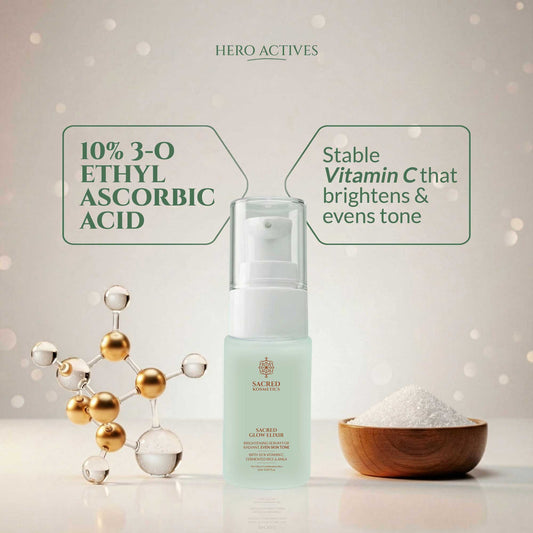

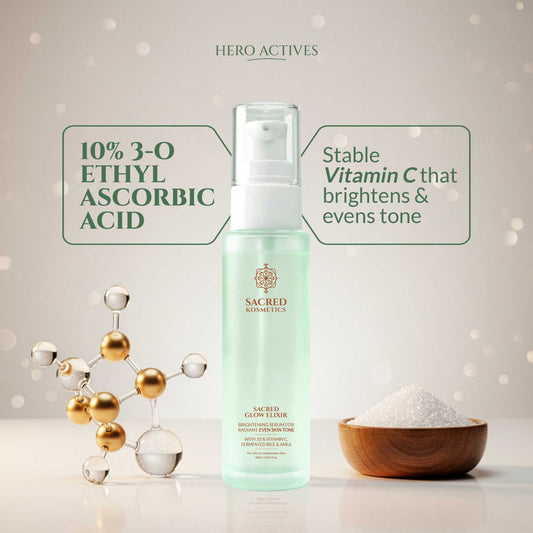

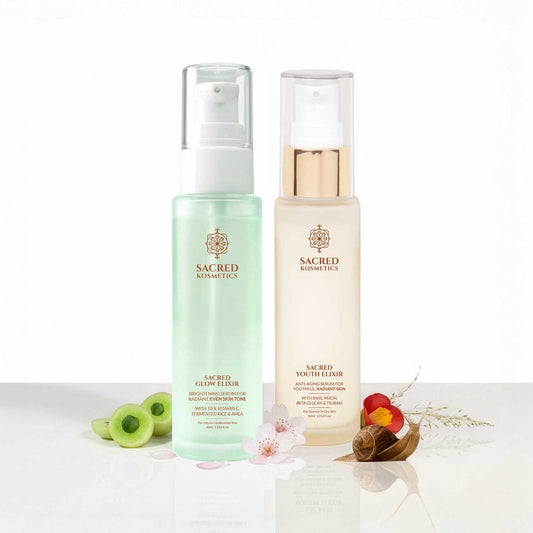


Part of our complete serum collection, vitamin C serums for hyperpigmentation are specifically formulated to address uneven skin tone and dark spots.
What Hyperpigmentation Is and How It Develops
Hyperpigmentation refers to darkened patches or spots that form when melanin production increases in certain areas of the skin. Common triggers include sun exposure, inflammation from acne, hormonal changes, and environmental stress. These factors can cause uneven tone that becomes more visible over time.
In skin with higher melanin levels, such as Indian skin types, pigmentation can be more persistent because the skin generates more melanin in response to irritation or UV exposure. Because of this, gradual and targeted care is often more effective than aggressive treatments that may lead to sensitivity.
Vitamin C serums for hyperpigmentation focus on regulating melanin activity and improving skin clarity with regular use rather than providing instant bleaching effects. This makes them a key part of a balanced skincare routine for visible but sustainable tone improvement.
How Vitamin C Works to Address Hyperpigmentation
Vitamin C is a potent antioxidant that supports melanin regulation and helps improve uneven tone. It works by inhibiting the activity of tyrosinase, an enzyme involved in melanin production. Over time, this helps reduce the visibility of dark spots and supports a more uniform complexion.
Because vitamin C is water-soluble and lightweight, serums formulated with it absorb efficiently and penetrate deeper layers of the skin. This makes them suitable for daily use, either in morning or evening routines.
For many individuals, Vitamin C serums are paired with serums for brighter complexion to improve overall radiance while also addressing patchy tone.
Key Benefits of Vitamin C Serums for Pigmentation
Using vitamin C serums consistently offers multiple visible benefits:
-
Helps reduce dark spots and pigmentation caused by sun exposure
-
Improves overall brightness and skin clarity
-
Supports collagen production which improves skin texture
-
Provides antioxidant protection against environmental stress
These serums help the skin reflect light more evenly, resulting in a more balanced, luminous appearance. While results are gradual, they are sustained with regular use.
Vitamin C also complements hydration focused routines. For deeper moisture and improved texture, these serums pair well with hydrating serums with hyaluronic acid to support ongoing skin comfort.
Vitamin C and Consistency in Pigmentation Care
Hyperpigmentation improves gradually and requires consistent application rather than short bursts of treatment. Vitamin C works best when used daily as part of a stable routine that supports skin renewal without irritation. Skipping applications or frequently changing actives can slow visible progress and increase sensitivity.
For Indian skin types, maintaining consistency is especially important because inflammation can easily trigger new pigmentation. A steady routine focused on protection, hydration, and gentle correction allows vitamin C to work more effectively over time while reducing the risk of rebound dark spots.
Who Should Use Vitamin C Serums for Hyperpigmentation
Vitamin C serums for hyperpigmentation are suitable for anyone experiencing dark spots, post-acne marks, sun spots, or uneven tone. They are especially beneficial for people who live in warm or sunny climates where UV exposure frequently triggers pigmentation.
Women and men in their 20s, 30s, and beyond can incorporate vitamin C serums as part of preventive care as well as correction. In Indian skin types, pairing these serums with serums for Indian skin helps support balance and resilience alongside targeted tone work.
How to Use Vitamin C Serums in Your Routine
Vitamin C serums are most effective when applied to clean skin, typically in the morning followed by moisturiser and sunscreen. Sunscreen is essential, as UV exposure can worsen pigmentation and counteract progress.
In evening routines, vitamin C works well before richer emollients or barrier repair products, helping maintain balance while the skin repairs overnight. For comprehensive night routines, pairing with anti-aging serums supports overall skin recovery.
Vitamin C, Environmental Stress, and Long-Term Clarity
Pollution and environmental stress can increase oxidative damage, which may contribute to pigmentation and uneven skin tone. Vitamin C's antioxidant properties help neutralise free radicals and reduce oxidative stress on the skin.
For added protection against environmental triggers, vitamin C serums can be paired with serums designed for Indian skin and climate, which support the skin's defence mechanisms against daily exposure.
Over time, this combined approach of antioxidant support and environmental defence helps maintain a more even, resilient complexion.


The future of skincare begins with Sacred Kosmetics
Where Ayurvedic wisdom meets J beauty precision and K beauty innovation. Every ingredient is selected for safety and performance on melanin rich Indian skin.
Purity in every drop
Full ingredient transparency and clear concentration listing for informed skincare decisions.
Clinically thoughtful
Ayurveda, J beauty and K beauty combined to create science led serums for Indian skin.
Accessible luxury
Premium actives at honest prices so more people can enjoy visible results.
Sourced with intention
Actives selected from the best regions for purity, potency and long term benefits.
Frequently Asked Questions
What causes hyperpigmentation on Indian skin?
Which serum is best for hyperpigmentation on Indian skin?
How long does it take for hyperpigmentation serums to work on Indian skin?
Do I need sunscreen with my hyperpigmentation serum?
Can I use hyperpigmentation serums on sensitive Indian skin?
Frequently Asked Questions
What is hyperpigmentation, and how do Vitamin C serums help with it?
Hyperpigmentation is characterized by darkened patches or spots on the skin caused by increased melanin production. Vitamin C serums help by inhibiting the enzyme tyrosinase, which is involved in melanin production, thereby reducing the appearance of dark spots and promoting a more even skin tone.
How should I incorporate Vitamin C serums into my skincare routine?
Vitamin C serums are most effective when applied to clean skin, preferably in the morning followed by a moisturizer and sunscreen. In the evening, they can also be used before richer emollients or barrier repair products to support overnight skin recovery.
How long will it take to see results from using Vitamin C serums for hyperpigmentation?
Results from Vitamin C serums are gradual and can vary from person to person. Consistent daily use is key, and many users may start to see improvements in their skin clarity and reduction in dark spots over the course of several weeks.
Are Vitamin C serums suitable for all skin types?
Yes, Vitamin C serums for hyperpigmentation are suitable for all skin types, including sensitive skin. However, individuals with specific skin concerns or conditions should perform a patch test or consult with a dermatologist before starting any new product.
Can I use Vitamin C serums if I have Indian skin or pre-existing pigmentation issues?
Absolutely! Vitamin C serums are particularly beneficial for individuals with Indian skin types, as they help regulate melanin production and improve uneven skin tone. Consistent use can provide targeted care for existing pigmentation issues.
What are the best complementary products to pair with Vitamin C serums?
For optimal results, Vitamin C serums can be paired with hydrating serums containing hyaluronic acid to improve skin texture and comfort. Additionally, using them with sunscreens is essential to protect against UV exposure, which can exacerbate pigmentation.
Is it safe to use Vitamin C serums every day?
Yes, Vitamin C serums can be safely used daily as part of either your morning or evening routine. The lightweight, water-soluble formulation allows for efficient absorption, making them suitable for regular use without causing irritation.
What precautions should I take when using Vitamin C serums?
It is crucial to apply sunscreen during the day when using Vitamin C serums, as UV exposure can worsen pigmentation. Additionally, maintaining a consistent application routine will enhance the effectiveness of the serum and minimize sensitivity.